

Hey there! As a carbon steel coil supplier, I've seen firsthand how the microstructure of these coils can have a huge impact on their properties. So, let's dive into how the nuts and bolts of carbon steel coil microstructure affect the way it behaves.
The Basics of Carbon Steel Coil Microstructure
First things first, let's talk a bit about what carbon steel is. Carbon steel is basically steel that has carbon as its main alloying element. The amount of carbon in the steel can vary, and this can change the steel's properties big time.
The microstructure of carbon steel coils is made up of different phases. The most common ones are ferrite, pearlite, cementite, and sometimes martensite. Each of these phases has unique characteristics, and they interact with each other in the steel.
Ferrite is a soft and ductile phase. It's mostly pure iron with a little bit of carbon dissolved in it. Pearlite, on the other hand, is a combination of ferrite and cementite. It forms in a lamellar structure, which gives it different properties compared to just ferrite. Cementite is a very hard and brittle compound of iron and carbon. When it comes to martensite, it's a super-hard phase that forms under certain rapid cooling conditions.
How Microstructure Affects Strength
One of the most important properties of carbon steel coils is their strength. The microstructure plays a key role here.
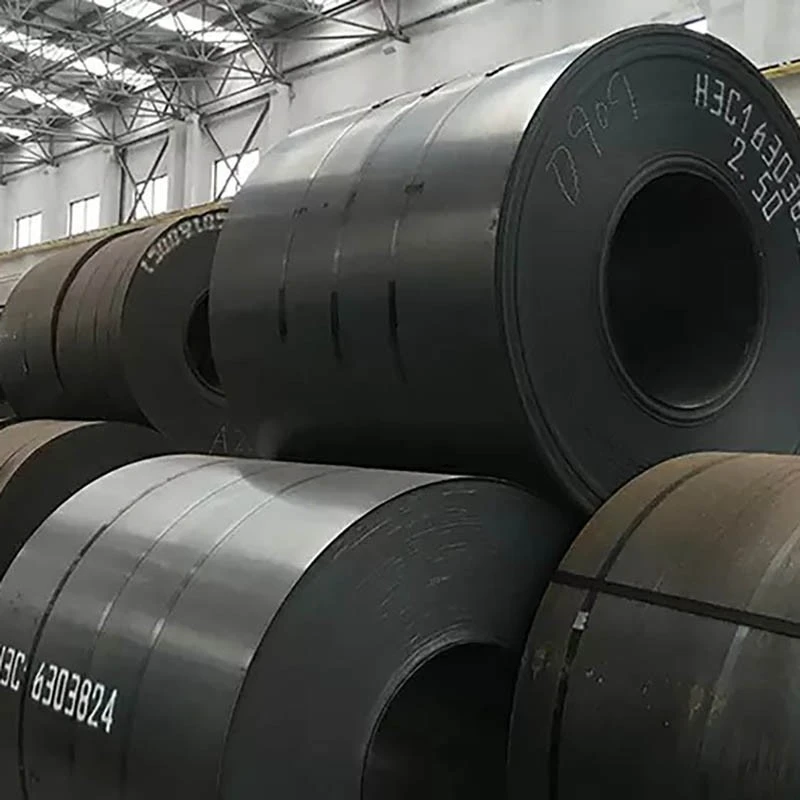
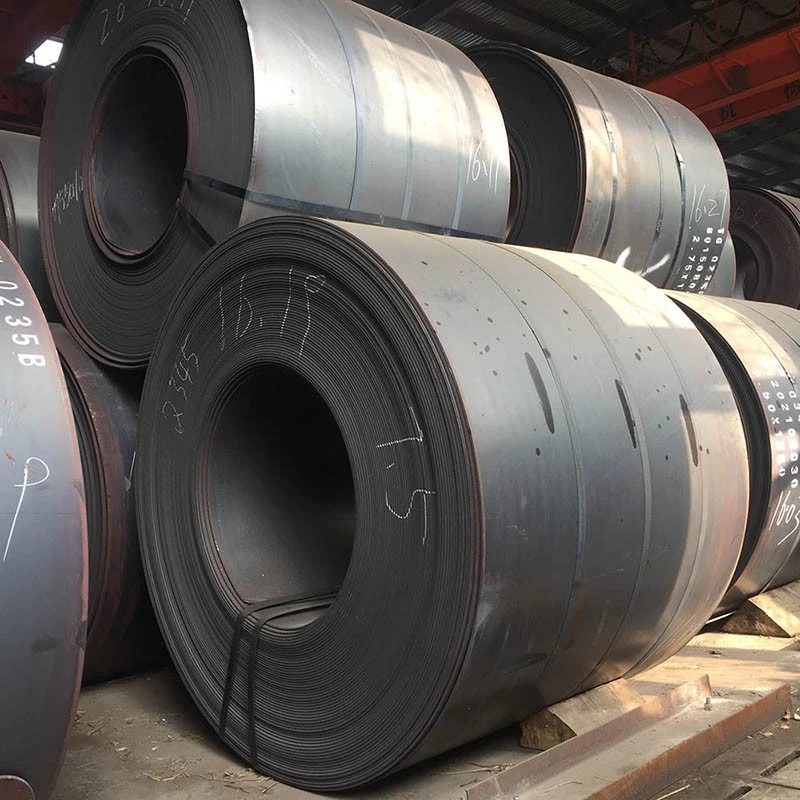
If you have a higher proportion of pearlite and cementite in the microstructure, the steel will generally be stronger. The lamellar structure of pearlite provides some resistance to deformation. The hard cementite particles act as barriers to the movement of dislocations in the steel. Dislocations are like tiny defects in the crystal structure that allow the steel to deform under stress. When you have more of these barriers, it's harder for the dislocations to move, so the steel is stronger.
For example, Q275 Carbon Steel Coil usually has a relatively high carbon content, which leads to a microstructure with more pearlite and cementite. This makes it stronger than, say, Q195 Carbon Steel Coil, which has a lower carbon content and a microstructure with more ferrite. The higher ferrite content in Q195 means it's softer and less strong, but it's more ductile.
Impact on Ductility
Ductility is all about how much a material can be stretched or deformed before it breaks. Ferrite is the key player here when it comes to carbon steel coil ductility.
Since ferrite is soft and ductile, a steel with a higher proportion of ferrite will be more ductile. When you stress the steel, the dislocations in the ferrite can move around more easily, allowing the steel to stretch without cracking.
Let's take Q215 Carbon Steel Coil as an example. It has a good balance of ferrite and pearlite in its microstructure. The presence of ferrite gives it a decent amount of ductility, which means it can be formed into different shapes without too much trouble. In contrast, a steel with a lot of martensite will be very brittle and have low ductility. Martensite forms during rapid cooling, and its crystal structure is very rigid, not allowing much deformation.
Effects on Toughness
Toughness is the ability of a material to absorb energy and deform plastically before fracturing. It's a combination of strength and ductility.
The microstructure affects toughness in a few ways. A fine-grained microstructure generally leads to higher toughness. When the grains are smaller, there are more grain boundaries. Grain boundaries act as barriers to crack propagation. So, if a crack starts to form in the steel, it has a harder time spreading through a fine-grained microstructure.
Also, the presence of a right mix of phases matters. For instance, a steel with some ferrite and a small amount of well - dispersed cementite can have good toughness. The ferrite can deform plastically, absorbing energy, while the small cementite particles can resist crack growth to some extent. Q235B Carbon Steel Coil often has a microstructure that gives it a good balance of strength and toughness. This makes it suitable for a wide range of applications, from construction to manufacturing.
Corrosion Resistance
The microstructure can also impact the corrosion resistance of carbon steel coils. Ferrite and pearlite have different electrochemical properties, and this can affect how the steel corrodes.
In a carbon steel with a lot of ferrite, the ferrite can be more active in an electrochemical environment. If there's a difference in potential between different phases in the steel, it can lead to a galvanic cell, which can speed up corrosion. So, a homogeneous microstructure with fewer phase differences can be more corrosion - resistant.
Some heat treatments can change the microstructure to improve corrosion resistance. For example, forming a passive layer on the surface by altering the microstructure slightly can help protect the steel from the environment. Q345B Carbon Steel Coil can be treated to have a more corrosion - resistant microstructure, making it a good choice for applications where it might be exposed to moisture or other corrosive substances.
Why This Matters for You
Now, you might be wondering why all this microstructure talk is important to you as a buyer. Well, understanding the relationship between microstructure and properties helps you choose the right carbon steel coil for your specific needs.
If you need a coil for a high - strength application, like building a heavy - duty structure, you'll want a steel with a microstructure that gives it high strength, like a high - carbon steel with more pearlite and cementite. On the other hand, if you're going to do a lot of forming and shaping, you'll want a more ductile steel with a higher ferrite content.
Choosing the wrong coil could lead to problems down the road. If you use a low - ductility steel for a forming operation, it might crack during the process. If you use a low - strength steel for a high - stress application, it could fail prematurely.
Let's Connect
As a carbon steel coil supplier, I'm here to help you make the best choice. Whether you're working on a small DIY project or a large - scale industrial application, I can provide you with the right carbon steel coil based on your requirements.
If you're interested in learning more or want to discuss your specific needs, don't hesitate to reach out. We can talk about the different types of carbon steel coils, their microstructures, and how they'll perform in your application. Let's work together to find the perfect carbon steel coil for you!
References
- Smith, J. (2018). The Science of Steel. Publisher X.
- Johnson, A. (2020). Microstructure and Properties of Metals. Publisher Y.