

Carbon steel coils are a fundamental material in various industries, from construction to manufacturing. As a carbon steel coil supplier, I often encounter questions about the differences between hot-rolled and cold-rolled carbon steel coils. Understanding these differences is crucial for making informed decisions when it comes to selecting the right material for your specific needs. In this blog post, I'll delve into the key disparities between hot-rolled and cold-rolled carbon steel coils, exploring their production processes, characteristics, and applications.
Production Processes
Hot-Rolled Carbon Steel Coil
Hot rolling is a process that involves heating a steel billet or slab above its recrystallization temperature, typically around 1,100 to 1,200 degrees Celsius. Once heated, the steel is passed through a series of rollers to reduce its thickness and shape it into a coil. The high temperature during hot rolling allows the steel to be easily deformed, making it a cost-effective method for producing large quantities of steel.
During hot rolling, the steel undergoes significant changes in its microstructure. The high temperature causes the grains in the steel to recrystallize, resulting in a more uniform and coarser grain structure. This process also helps to eliminate internal stresses in the steel, making it more ductile and easier to work with.
Cold-Rolled Carbon Steel Coil
Cold rolling, on the other hand, is a process that is performed at room temperature or slightly above. After hot rolling, the steel is further processed by passing it through a series of cold rollers to reduce its thickness and improve its surface finish. Cold rolling is a more precise and controlled process than hot rolling, allowing for the production of steel with a higher degree of dimensional accuracy and a smoother surface finish.
During cold rolling, the steel is subjected to high pressures, which cause the grains in the steel to become elongated and aligned in the direction of rolling. This results in a finer grain structure and increased strength and hardness. However, cold rolling also introduces internal stresses in the steel, which can make it more brittle and less ductile than hot-rolled steel.
Characteristics
Surface Finish
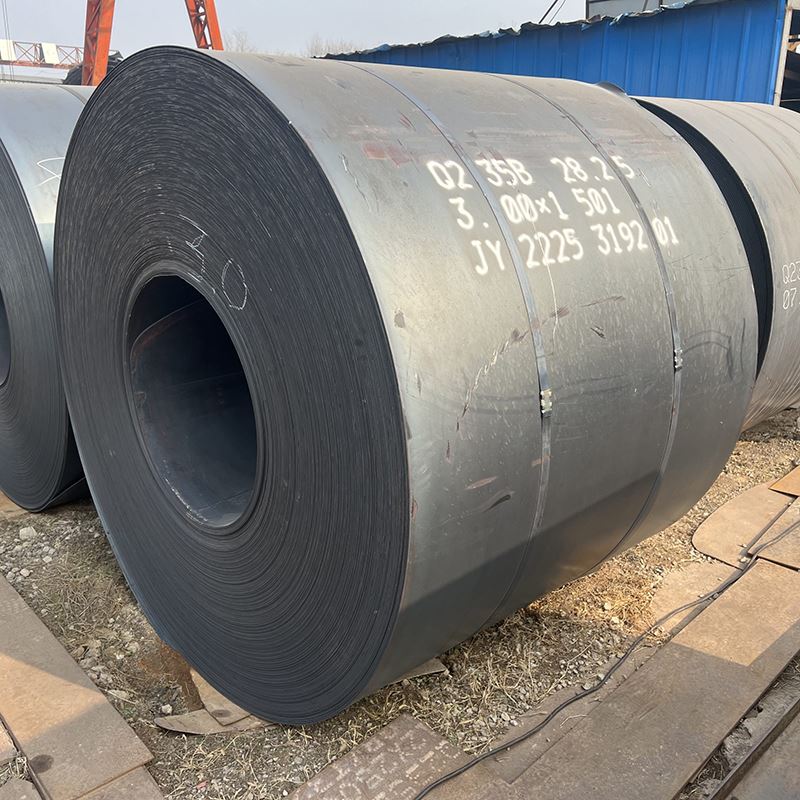
One of the most noticeable differences between hot-rolled and cold-rolled carbon steel coils is their surface finish. Hot-rolled steel has a rough, scaly surface due to the oxidation that occurs during the hot rolling process. This surface finish is often referred to as "mill scale" and can be removed through a process called pickling, which involves immersing the steel in an acid solution to remove the scale.
Cold-rolled steel, on the other hand, has a smooth, shiny surface finish due to the additional processing it undergoes during cold rolling. This smooth surface finish makes cold-rolled steel more aesthetically pleasing and suitable for applications where appearance is important, such as in the automotive and appliance industries.
Dimensional Accuracy
Cold-rolled steel is known for its high degree of dimensional accuracy. The cold rolling process allows for precise control over the thickness and width of the steel, resulting in a more consistent product. This makes cold-rolled steel ideal for applications where tight tolerances are required, such as in the manufacturing of precision components.
Hot-rolled steel, on the other hand, has a slightly less precise dimensional accuracy due to the nature of the hot rolling process. The high temperature and rapid cooling during hot rolling can cause the steel to expand and contract, resulting in slight variations in thickness and width. However, these variations are usually within acceptable limits for most applications.
Strength and Hardness
Cold-rolled steel is generally stronger and harder than hot-rolled steel. The cold rolling process increases the strength and hardness of the steel by aligning the grains in the steel and introducing internal stresses. This makes cold-rolled steel suitable for applications where high strength and hardness are required, such as in the construction of bridges and buildings.
Hot-rolled steel, on the other hand, is more ductile and less brittle than cold-rolled steel. The recrystallization process during hot rolling results in a more uniform and coarser grain structure, which makes the steel more ductile and easier to work with. This makes hot-rolled steel suitable for applications where formability is important, such as in the manufacturing of automotive parts and pipes.
Applications
Hot-Rolled Carbon Steel Coil
Hot-rolled carbon steel coils are commonly used in a variety of applications, including:
- Construction: Hot-rolled steel is widely used in the construction industry for structural applications, such as beams, columns, and plates. Its high strength and ductility make it suitable for withstanding heavy loads and stresses.
- Manufacturing: Hot-rolled steel is also used in the manufacturing industry for the production of various components, such as pipes, tubes, and automotive parts. Its formability and cost-effectiveness make it a popular choice for mass production.
- Energy: Hot-rolled steel is used in the energy industry for the construction of oil and gas pipelines, power plants, and wind turbines. Its high strength and corrosion resistance make it suitable for harsh environments.
Cold-Rolled Carbon Steel Coil
Cold-rolled carbon steel coils are commonly used in applications where a smooth surface finish, high dimensional accuracy, and high strength are required, such as:
- Automotive: Cold-rolled steel is widely used in the automotive industry for the production of body panels, frames, and other components. Its smooth surface finish and high strength make it suitable for improving the appearance and performance of vehicles.
- Appliances: Cold-rolled steel is also used in the appliance industry for the production of refrigerators, washing machines, and other household appliances. Its smooth surface finish and corrosion resistance make it suitable for enhancing the durability and aesthetics of appliances.
- Electronics: Cold-rolled steel is used in the electronics industry for the production of computer cases, mobile phone frames, and other electronic components. Its high strength and dimensional accuracy make it suitable for protecting sensitive electronic equipment.
Our Product Offerings
As a carbon steel coil supplier, we offer a wide range of hot-rolled and cold-rolled carbon steel coils to meet the diverse needs of our customers. Our product offerings include:
- Q275 Carbon Steel Coil: A high-strength carbon steel coil suitable for structural applications.
- Q215 Carbon Steel Coil: A low-carbon steel coil with good formability and weldability.
- Q235B Carbon Steel Coil: A widely used carbon steel coil with good comprehensive properties.
- Q345B Carbon Steel Coil: A high-strength low-alloy steel coil suitable for heavy-duty applications.
- Q195 Carbon Steel Coil: A low-carbon steel coil with excellent formability and ductility.
Conclusion
In conclusion, the differences between hot-rolled and cold-rolled carbon steel coils lie in their production processes, characteristics, and applications. Hot-rolled steel is more cost-effective, ductile, and suitable for applications where formability is important, while cold-rolled steel is more precise, stronger, and suitable for applications where a smooth surface finish and high dimensional accuracy are required.
As a carbon steel coil supplier, we understand the importance of selecting the right material for your specific needs. Our team of experts can help you choose the most suitable hot-rolled or cold-rolled carbon steel coil for your project. If you have any questions or would like to discuss your requirements, please don't hesitate to contact us. We look forward to working with you and providing you with the highest quality carbon steel coils at competitive prices.
References
- ASM Handbook, Volume 1: Properties and Selection: Irons, Steels, and High-Performance Alloys
- Metals Handbook Desk Edition, 2nd Edition
- Steel Designers' Manual, 6th Edition